Higher Yields Reflect Positivity
Midstream had a tough month in September, with the American Energy Infrastructure Index (AEITR) -8.3%, its second worst month in the past five years. Rising treasury yields pressured sectors traditionally owned for their income. The S&P Utilities ETF (XLU) was –5.9% for the month and is now –5.7% YTD through the third quarter. The Vanguard Real Estate ETF (VNQ) was –6.3% and is now +4.2% YTD. The S&P 500 Low Volatility High Dividend Index was –7.7% and is +4.4% YTD. The Barclays Agg was –2.6% in September and is –2.8% YTD.
The AEITR’s YTD performance of +17.9% is well ahead of other income-generating sectors, even after a lousy month.
The 1.2% increase in ten year treasury yields over the past year has been fully the result of real yields moving higher. Inflation expectations, defined as the difference between ten year nominal treasuries and TIPs (Treasury Inflation Protected Securities) have not budged and sit at around 2.3%.
The University of Michigan survey of consumer expectations has future inflation at around 3%, but similar to the bond market, this figure has been stable.
This is consistent with a positive economic outlook. Real yields have moved up because the market is expecting strong growth.
An important confirmation of this shows up in fund flows. In the twelve months through July, foreign investors bought a record $942BN in US equities and equity funds, while their purchases of US treasuries cooled. China has been steadily reducing their holdings for over a decade, which at $618BN are less than half their peak of $1.3TN in 2013.
It’s also consistent with the S&P500 being +12.8% YTD. In March, weakness in bonds hurt stocks, which were –4.9%. The explanation offered was that the NPVs of growth stocks that dominate the index were acutely sensitive to a higher discount rate on their much higher profits many years out.
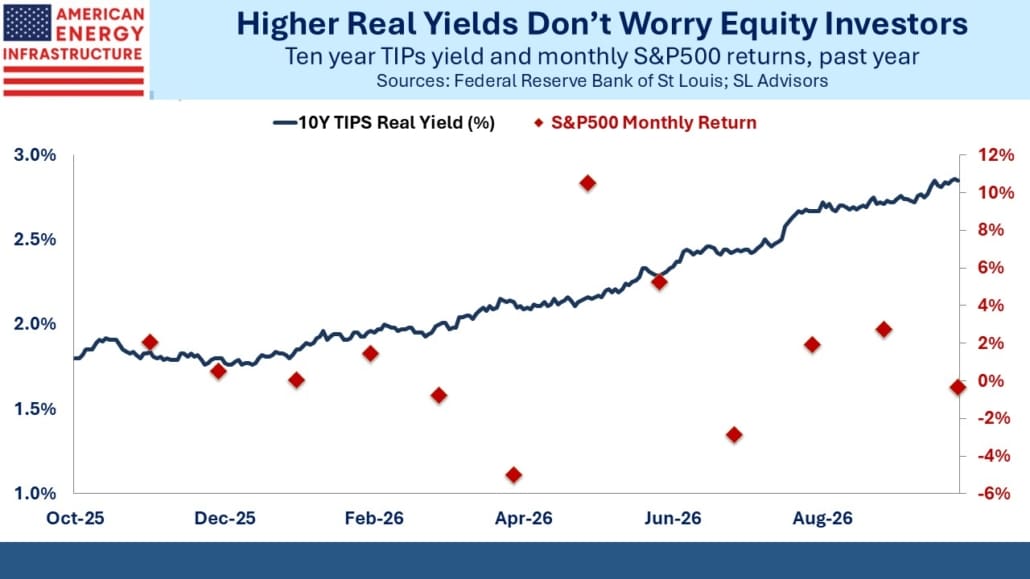
Bonds had a worse month in September, but the S&P500 was only –0.4%. Over the past year in eight of twelve months stocks have been up and only two months (March and June) were down by more than 2%.
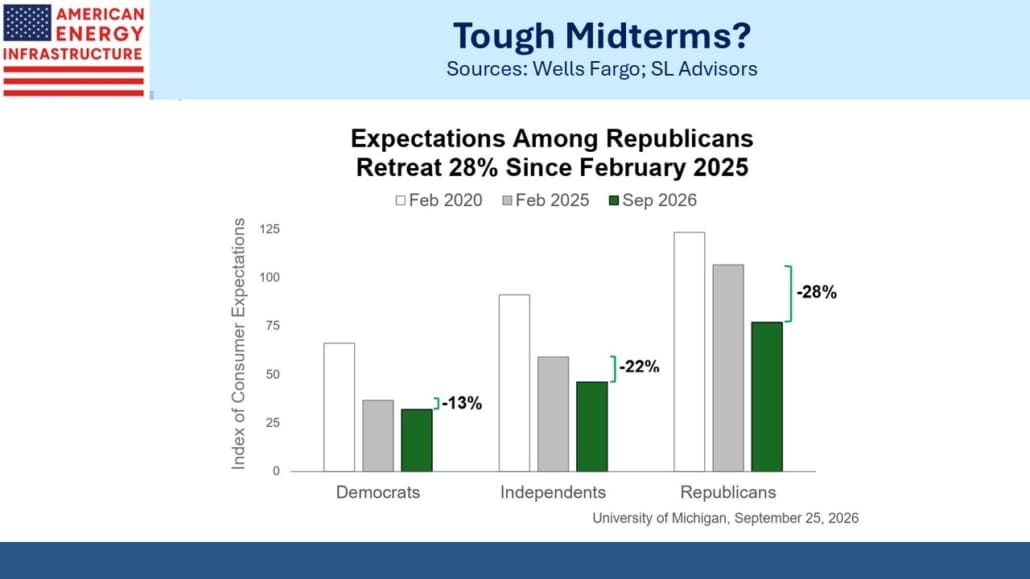
Surveys continue to defy the positive outlook held by investors. The University of Michigan reported that Consumer Expectations fell to 46.3 in September, down 10.4% year-on-year. Political affiliation skews the result, but the White House will be frustrated to see that Republicans are becoming more pessimistic at a faster rate than Independents or Democrats.
Your blogger, who has never been surveyed, retains his confidence in America’s bright future, which has always been right.
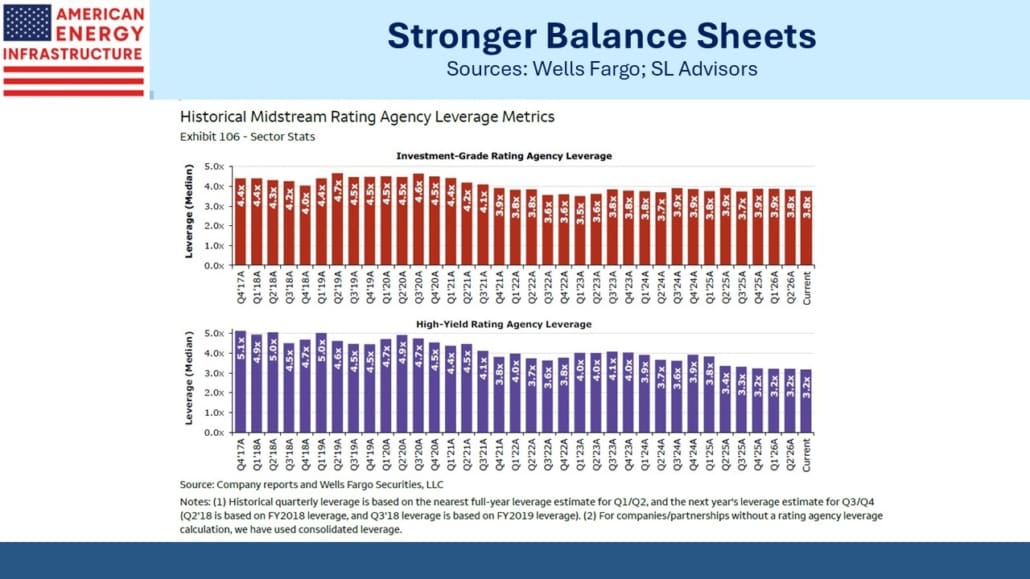
A steady if unheralded improvement in the financial strength of midstream underpins its 20% five-year annual return, handily beating the S&P500 over that period at 13.8%. Leverage has steadily come down, with many companies in the 3.0-3.5 range Debt:EBITDA, down by 0.5X to 1.0X over the past decade.
Years ago, Kinder Morgan (KMI) used to argue that their diversified asset base could support 5.0X. Rating agencies disagreed, and in 2015 KMI cut their $2 annual dividend by 75%. Even now it’s only $1.19.
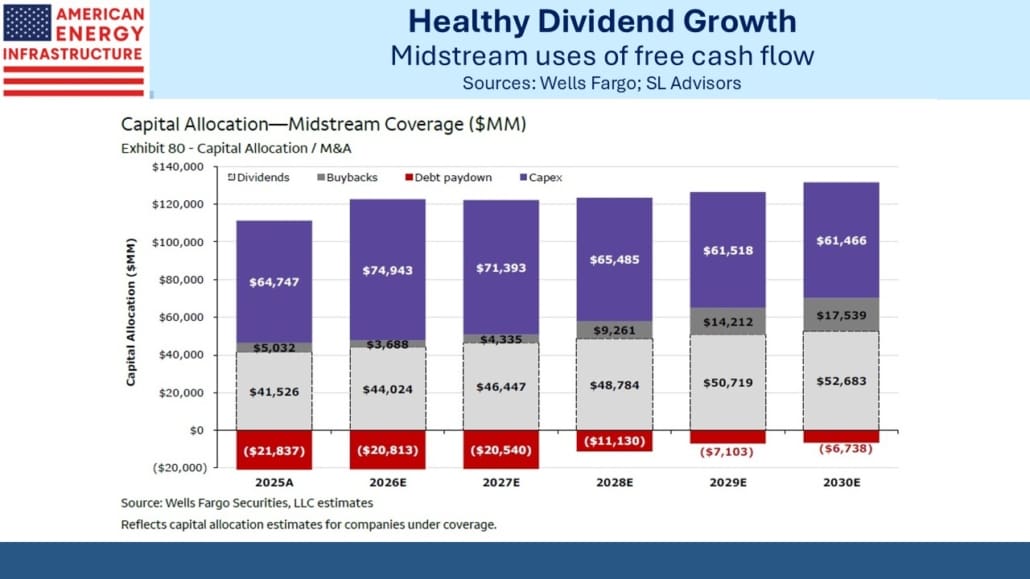
Wells Fargo is projecting 4.9% annual dividend growth for the midstream sector.
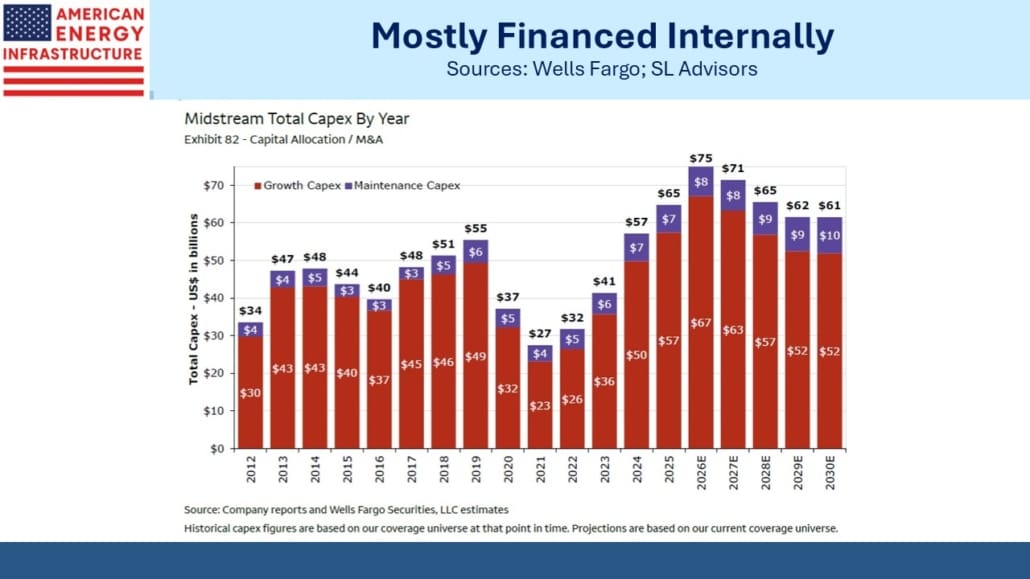
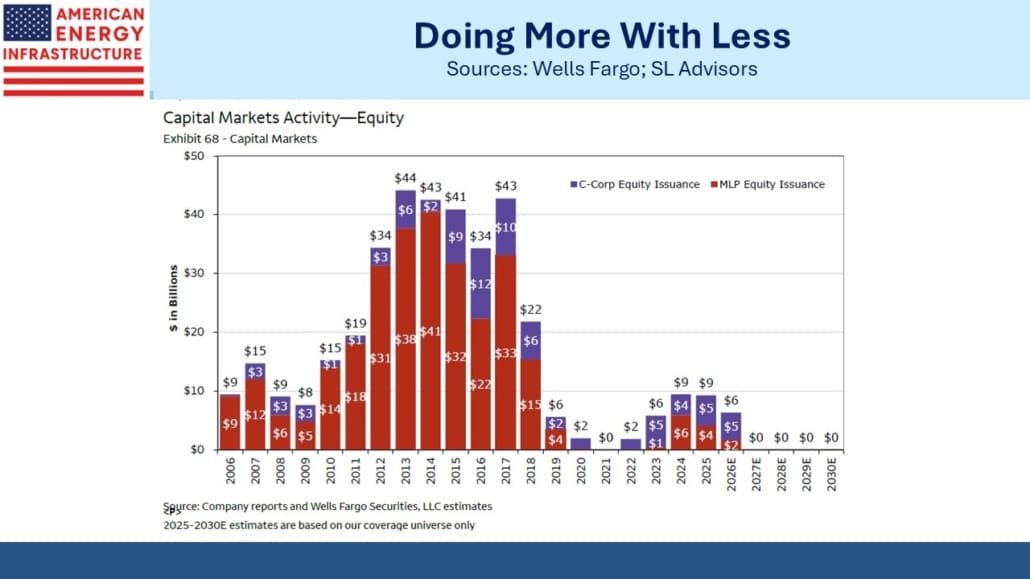
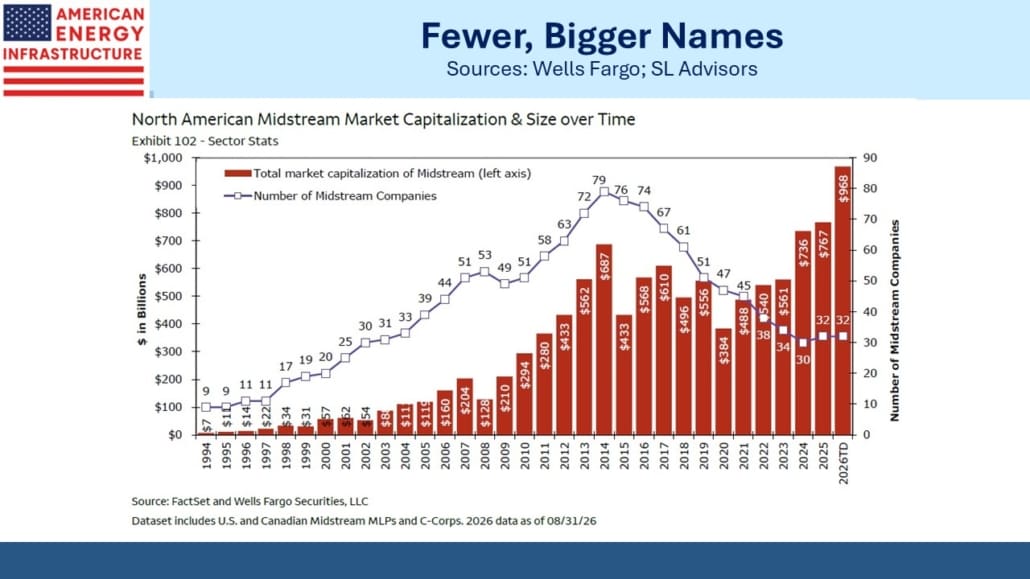
Capex has been creeping up, but in another sign of improved stewardship it’s mostly financed through internally generated cash rather than public equity offerings. Midstream generates far less in capital markets fees for Wall Street than it used to. The industry has grown while the number of names has shrunk. Today it’s mainly an investment grade, large cap sector.
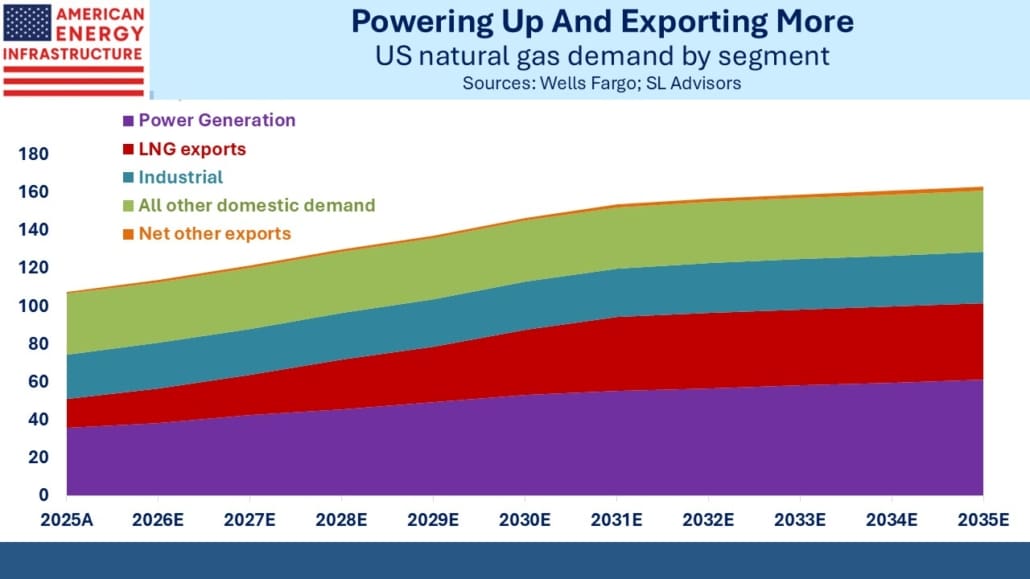
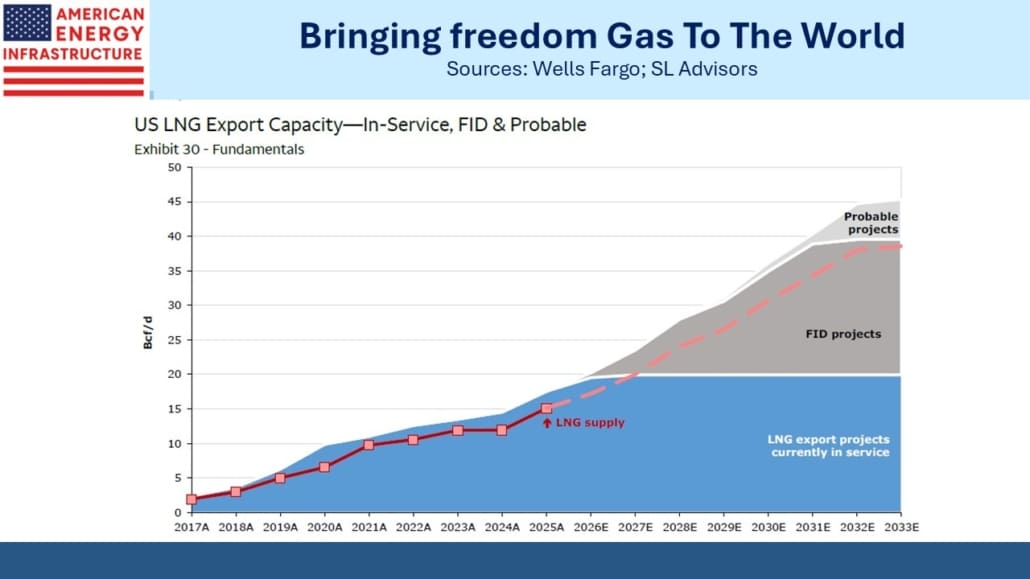
The growth outlook for natural gas remains dominated by increasing exports and greater power generation. Wells Fargo expects feedstock for LNG terminals to more than double by 2035 (10.2% CAGR), while gas for power generation will grow at 5.6% annually.
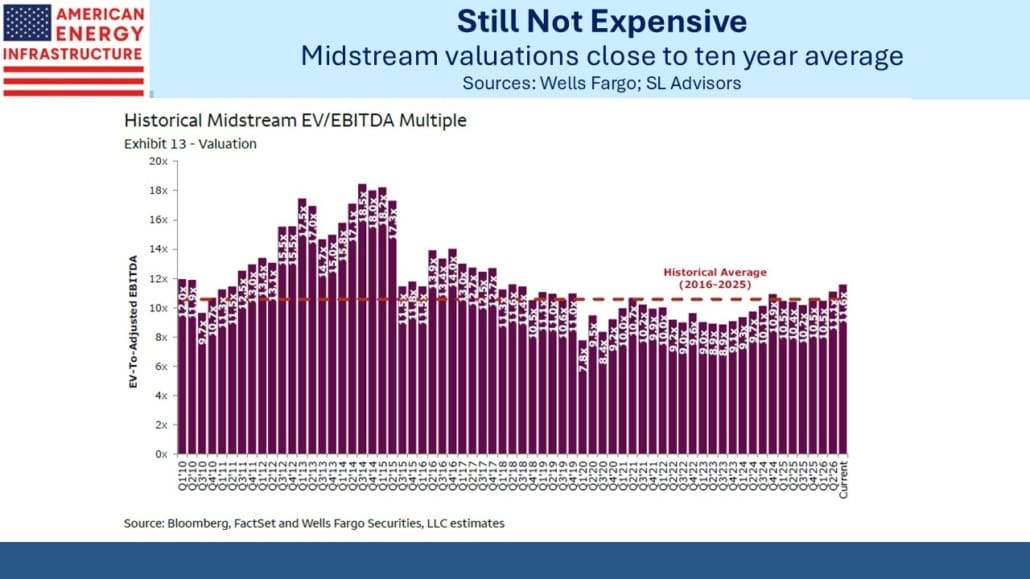
Consequently, we think midstream remains attractively priced. The rise in real yields that reflects a robust growth outlook is good for midstream companies, which benefit from higher volumes. The Iran war has boosted the outlook for US exporters of hydrocarbons. The weakness in September doesn’t seem justified by the fundamentals.
Just over four years ago Stuart Kirk, then HSBC’s head of Responsible Investment, gave a delightful presentation about the extreme hype over global warming that dominated the left wing and media. He accused presenters of trying to “out-hyperbole” one another, and noted that even though the presenter just before him had warned that humans would not survive, “…no-one ran from the room. In fact, most of you barely looked up from your mobile phones.”
The presentation hastened Kirk’s departure from HSBC, and he now writes a column for the Financial Times.
Since then, the shrill voices warning of the end of the planet have been replaced by more sober consideration that places climate change alongside other major challenges such as malnutrition, access to clean water and reliable electricity. Regulators in the US and EU have reduced the burden on companies to report on potential climate change impacts.
As for Stuart Kirk, he’s moved on to condemn the current fear that fiscal profligacy will condemn us all to penury (see The climate doom-mongers now dread sovereign debt blowouts). He’ll probably find a lot of familiar faces on the other side of this debate.
We have two funds that seek to profit from this environment: